Megawatt Charging significantly shortens charge times for Electric Straddle Carriers
Key takeaways
- Kalmar's first Megawatt Charging System (MCS) for electric straddle carriers enables significantly faster charging than traditional CCS.
- Fewer physical chargers are needed to manage an entire fleet, directly reducing capital expenditure for terminal operators.
- Developed in partnership with Kempower, the MCS has been tested in Tampere late 2025, with the first customer deployment at DP World's London Gateway on 12 electric straddle carriers.
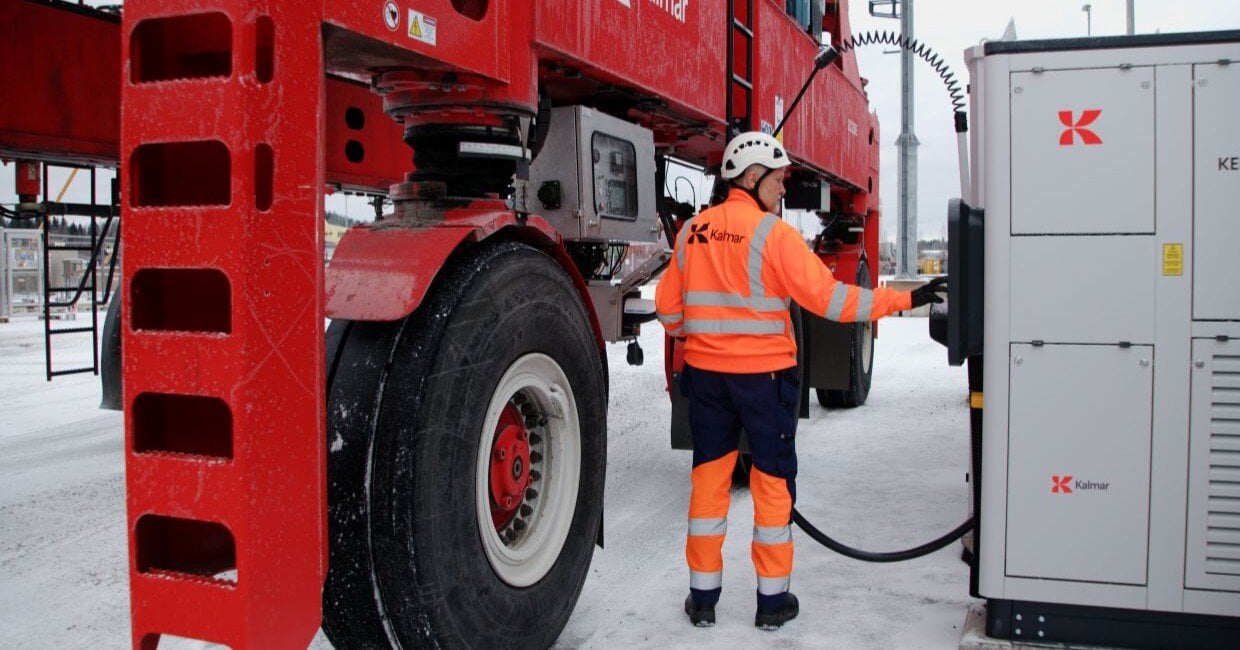
Kalmar has announced the availability of the first Megawatt Charging System for electric straddle carriers. The system, which is currently being tested at the Kalmar Innovation Centre in Tampere, Finland, will enable significantly faster charging for electric straddle carriers. This increases fleet availability while enabling terminals to operate with fewer physical chargers for their machines.
The new Kalmar Megawatt Charging System (MCS) enables much faster charging of straddle carriers compared to traditional CCS charging. This allows terminals to charge more vehicles during breaks, simplifying scheduling and maximizing uptime. Reduced charging times have a direct effect on machine availability, lowering the total cost of ownership of the fleet.
"We have been following the development of megawatt charging solutions closely, and with interfaces of up to 5 MW now available for shore power on ships, the technology was mature enough for a container terminal environment," says Sami Yli-Äyhö, Senior Manager, Product Management, Kalmar. "Depending on the charging power and operational profile of the terminal, operators could expect to see close to one to two hours of operation with five minutes of charging with the MCS."
Depending on the charging power and operational profile of the terminal, operators could expect to see close to one to two hours of operation with five minutes of charging with the MCS.
In action at London Gateway
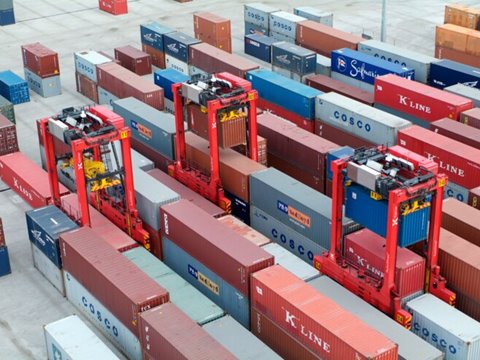
The first MCS in Finland is currently undergoing testing at Kalmar's test site in Tampere. The first customer deployment of the solution will be at DP World's London Gateway container terminal on 12 new Kalmar electric straddle carriers equipped with the MCS interface currently under final commissioning at the site.
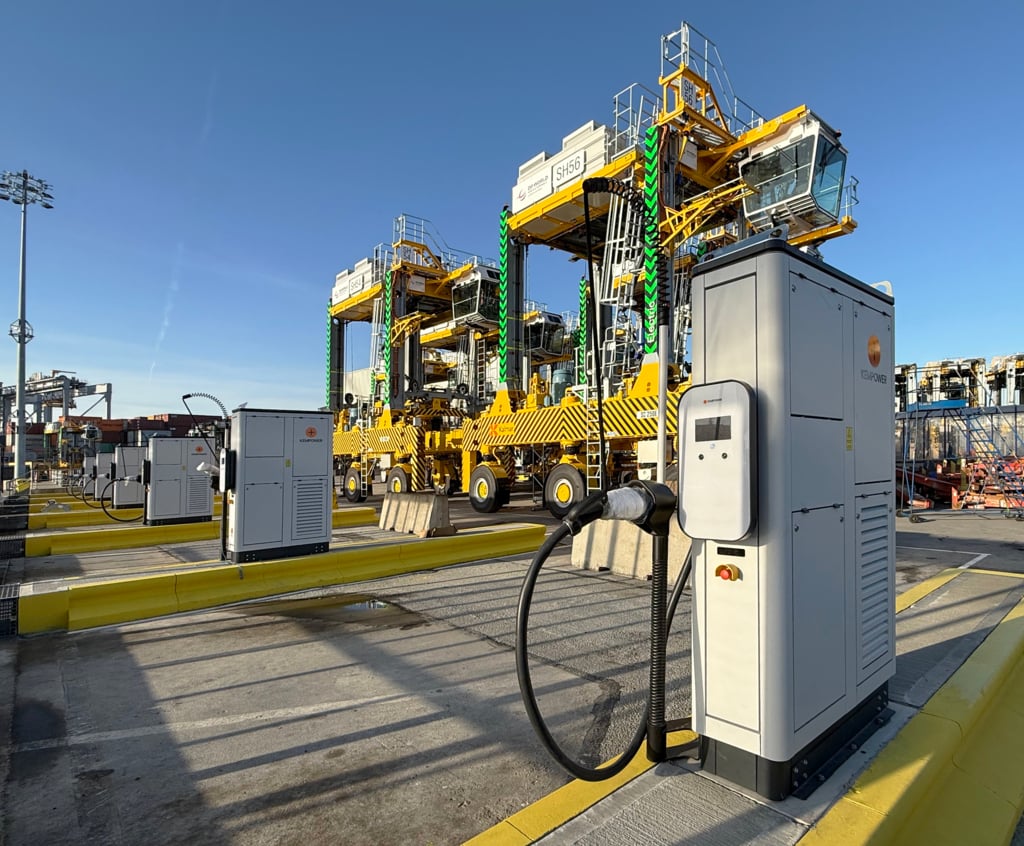
"Megawatt charging makes continuous 'hot seat' operations for electric straddle carriers significantly more accessible for terminal operators," says Riikka Lankinen, Project Manager, Horizontal Transportation, Kalmar. "The best part of megawatt charging is that terminals will need fewer physical chargers to manage their entire fleet. This significantly reduces the capital expenditures of their operations."
The best part of megawatt charging is that terminals will need fewer physical chargers to manage their entire fleet. This significantly reduces the capital expenditures of their operations.
First in the industry
The Kalmar Megawatt Charging System has been developed in partnership with Kempower, a leading manufacturer of EV charging solutions based in Finland. "This collaboration with Kalmar is really at the forefront of the industry," says Antti Vuola, Vice President, Product Management, Kempower. "Megawatt charging has previously been tested and deployed on road trucks, but we have not yet seen other port equipment manufacturers deploying it on their products. By working closely with Kalmar and their pilot customers, we've been able to not only develop a groundbreaking charging solution, but also collaborate in mapping out the best pathways towards electrifying port operations in the future."
We've been able to not only develop a groundbreaking charging solution, but also collaborate in mapping out the best pathways towards electrifying port operations in the future.
Megawatt Charging: The New Normal
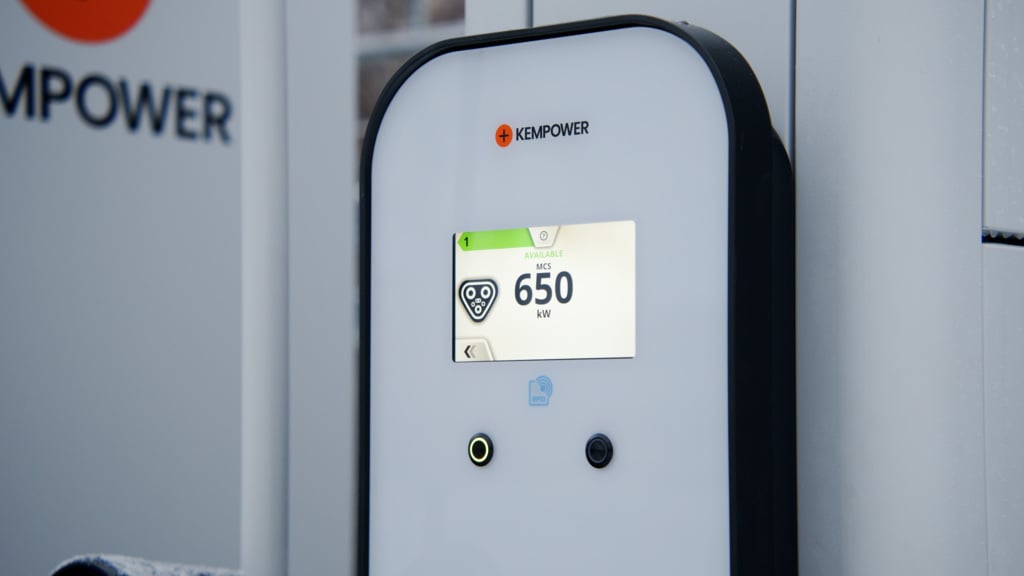
The Kalmar Megawatt Charging system currently supports charging of Kalmar electric straddle carriers at up to 500kW, with full megawatt-level charging expected to be available for the next generation of machines. The automation of the MCS interface is also under development.
"Electrification is a key goal for port and terminal operators around the world, as well as a strategic focus area for Kalmar," says Marko Hopeaharju, Head of Horizontal Transportation Solutions, Kalmar. "Kalmar's approach to electrification is focused on smart charging solutions and opportunity charging that maximises fleet availability. The availability of megawatt charging for straddle carriers is a significant step along this path, and we are excited to continue developing it together with our electrification partner Kempower as well as our key customers."
Electrification is a key goal for port and terminal operators around the world, as well as a strategic focus area for Kalmar

Related articles
Further reading
Subscribe and receive updates in your email
Suscríbase